· IT DEV · 8 min read
GPT-5.6 (Sol, Terra, Luna) and ChatGPT Work: what actually changes
OpenAI released GPT-5.6 Sol, Terra, and Luna along with ChatGPT Work. See which model you need, what it costs, how Ultra mode works, and what it means for marketing, SEO, and daily work.
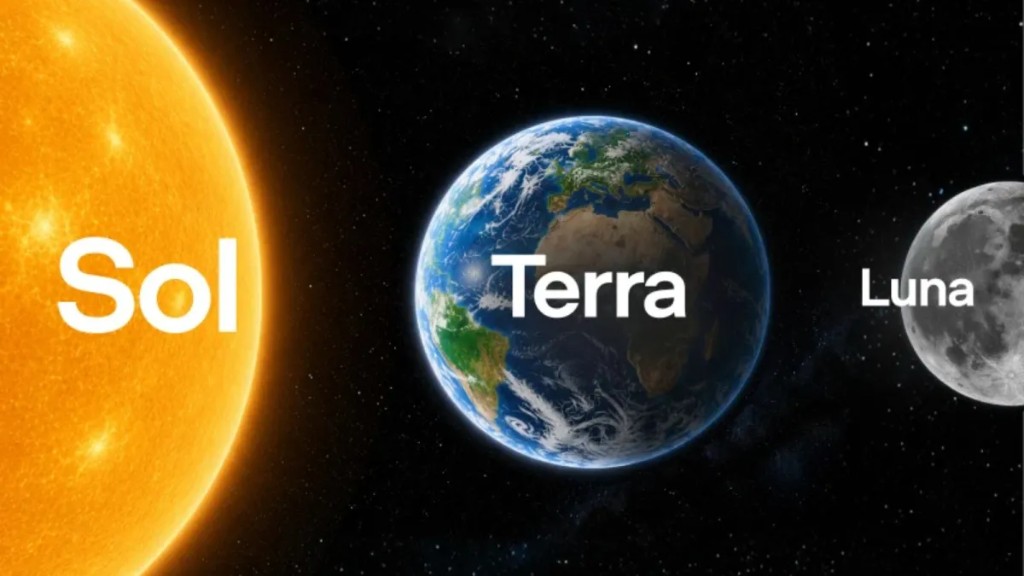
OpenAI introduced the GPT-5.6 family (Sol, Terra, Luna) and ChatGPT Work, an experience where AI does not only answer questions but takes on full workflows. The release was on July 9, 2026, and according to OpenAI’s official announcement, the models are available in ChatGPT, Codex, the API, and platforms such as Amazon Bedrock.
If you already read generic articles on the topic, the point is this: we are no longer talking about “better answers” but about model choice, cost, agents, and multi-step projects. This guide explains what changed, which model to pick, and how businesses, marketers, and developers can use it without falling for hype.
Why GPT-5.6 is not “just another upgrade”
Until recently, each new ChatGPT release mainly improved:
- text quality,
- answer accuracy,
- better context understanding.
GPT-5.6 marks a different philosophy. OpenAI now separates the generation (5.6) from the capability tier (Sol / Terra / Luna). You do not simply choose “new or old model.” You choose how much intelligence, speed, and cost you need per task.
At the same time, ChatGPT Work moves usage from chat to delegation: you set a goal, the system plans steps, uses tools, produces deliverables, and asks for approval at critical points.
For businesses, AI moves from a productivity tool to a virtual workflow partner. For agencies like IT DEV, marketing routines, SEO audits, and content research can run in structured pipelines instead of ad hoc prompts.
The GPT-5.6 family: Sol, Terra, Luna
| Model | Role | Ideal for | API price (input/output per 1M tokens) |
|---|---|---|---|
| Sol | Flagship | Complex reasoning, coding, security research, large agentic workflows | $5 / $30 |
| Terra | Balanced | Daily work, reports, marketing copy, data analysis | $2.50 / $15 |
| Luna | Efficient | Bulk tasks, chatbots, automation, real-time apps | $1 / $6 |
According to OpenAI, Terra is competitive with GPT-5.5 on many tasks at ~2× lower cost. Luna offers strong capability at the lowest cost in the line.
GPT-5.6 Sol: when it is worth it
Choose Sol when:
- you need multi-step reasoning (strategy, analysis, planning),
- you work with large codebases or complex refactoring,
- you run agentic workflows (many tools, many files, long duration),
- quality matters more than cost.
In benchmarks OpenAI published, Sol shows strong gains in coding (Terminal-Bench 2.1), biology workflows (GeneBench v1), and cybersecurity tasks.
Note: Sol is not available on every ChatGPT plan. According to Axios, you need Plus, Pro, Business, or Enterprise for Sol access.
GPT-5.6 Terra: the default for most people
Terra is the sweet spot for:
- marketing teams producing briefs, ads, landing copy,
- SEO specialists analyzing SERPs and competitor content,
- SMBs that want quality without premium cost,
- daily use in ChatGPT Work.
If you are not sure where to start, start with Terra and low reasoning effort. If results are not enough, raise reasoning or try Sol.
GPT-5.6 Luna: volume, speed, automation
Luna fits when:
- you run thousands of similar requests (classification, tagging, summarization),
- you need low latency in production apps,
- you want to cut API cost at scale.
It is not a “weak” model. It is targeted for tasks where speed and cost matter more than deep reasoning.
ChatGPT Work: from chat to project delivery
ChatGPT Work is OpenAI’s agent for jobs that do not fit in one prompt-and-answer. Instead of asking “write me a report,” you set a goal like:
“Run competitor analysis for 5 SEO companies in Athens, compare pricing, services, and positioning, and build a 12-slide presentation.”
Work can:
- gather information from the web and connected apps,
- read files (PDFs, spreadsheets, docs),
- create complete deliverables (docs, sheets, slides, sites),
- continue complex projects for hours,
- ask for approval before critical actions.
The unified desktop app brings Chat, Work, and Codex into one environment. You can brainstorm in one window and delegate execution to Work.
Practical examples for businesses
Marketing and content
- Monthly content calendar from buyer personas and keyword research.
- Five ad copy variants per campaign, with A/B test hypotheses.
- Competitive audit on 10 competitors with SWOT and action plan.
SEO and analytics
- Crawl analysis summary from exported data.
- Content gap report prioritized by search intent.
- Monthly performance deck from GA4 + Search Console exports.
Operations
- Onboarding documentation for new hires.
- SOPs from recorded processes.
- FAQ knowledge base from support tickets.
Sales
- Proposal templates customized by industry.
- Competitor battlecards.
- Follow-up sequences from CRM exports.
Ultra mode and reasoning effort: how to use them well
Reasoning effort
OpenAI introduced new reasoning levels, including max, which gives Sol more time for deep analysis.
Rule OpenAI suggests:
- Start with the best available model and the lowest reasoning.
- If the result is not enough, raise reasoning (not the model first).
- If it still is not enough, move to Sol (if you have access).
Why? High reasoning burns limits faster and increases latency. For routine tasks, low reasoning + Terra/Luna is usually enough.
Ultra mode
Ultra mode goes beyond a single agent. It coordinates sub-agents that handle parts of a job in parallel.
Example workflow:
- Agent A: market research
- Agent B: data analysis from spreadsheet
- Agent C: report writing
- Agent D: slide deck creation
The user gets one unified result. Ideal for projects with many moving parts, not simple questions.
GPT-5.6 vs GPT-5.5: what changed in practice
| Area | GPT-5.5 | GPT-5.6 |
|---|---|---|
| Model choice | Mostly one default | Sol / Terra / Luna tiers |
| Cost | One price point | Granular pricing by tier |
| Workflows | Chat-centric | ChatGPT Work for multi-step |
| Reasoning | Fixed | Adjustable (up to max) |
| Agents | Limited | Ultra mode with sub-agents |
| API caching | Basic | Explicit cache breakpoints, 30-min minimum cache life |
| Coding | Strong | State-of-the-art on Terminal-Bench 2.1 |
The core difference is not only “smarter.” It is more flexible and more cost-optimizable if you know which tier to pick.
What it means for marketers and SEO teams
Marketing teams gain three things:
1. Faster research, less manual work
Keyword research, competitor monitoring, SERP analysis, and content briefs can run as structured Work tasks instead of manual data collection.
2. Better cost-benefit with tier selection
- Luna: bulk meta descriptions, social captions, product tagging.
- Terra: blog outlines, ad variations, email sequences.
- Sol: strategic plans, complex audits, multi-market analysis.
3. New demand for quality, citation-ready content
The more people use AI for research, the more generic content becomes invisible. AI systems favor sources with:
- original data,
- clear structure (H2/H3, tables, lists),
- expert voice,
- verifiable claims.
That ties directly to GEO (Generative Engine Optimization). If you want to appear in ChatGPT, Perplexity, and Google AI Overviews, your content must be trustworthy and easy to extract, not just “SEO-friendly.”
Read also: How do I show up in ChatGPT? and First on Google, invisible in ChatGPT?.
What it means for developers and product teams
For technical teams, GPT-5.6 brings:
- Better coding in command-line workflows (planning, iteration, tool use).
- Codex integration in the same app as Work.
- API improvements: prompt caching with explicit breakpoints, 90% discount on cache reads.
- Deployment flexibility: available on OpenAI API, Codex, Amazon Bedrock.
Practical advice for dev teams:
- Terra for code review, documentation, unit tests.
- Sol for architecture decisions, security analysis, complex refactors.
- Luna for linting suggestions, commit messages, routine codegen.
How to choose a model: decision tree
Is the task routine / repetitive?
├─ Yes → Luna (or Terra if you need better quality)
└─ No → Need deep reasoning or multi-step execution?
    ├─ Yes → Sol + Work/Ultra (if you have access)
    └─ No → Terra
Bonus tip: For API integrations, use prompt caching on repeated system prompts. With 90% off cache reads, cost drops sharply in production workloads.
Safety, safeguards, and what to watch
OpenAI describes GPT-5.6 as the model with the strongest safeguards to date, especially for cyber and biology use cases. That means:
- More refusals on suspicious requests.
- Real-time classifiers that may delay answers.
- Account-level review on flagged activity.
- Phased rollout with testing before full availability.
For legitimate security work (patch development, vulnerability research, defensive testing), models are designed to help defenders more than attackers.
For businesses, practical advice is:
- Do not rely 100% on AI output for compliance, legal, or financial decisions.
- Keep human review on customer-facing content.
- Do not upload sensitive client data without policy.
Frequently asked questions
Which model do I get on free ChatGPT?
According to third-party rollout coverage, free/Go users mainly get Terra inside Work/Codex, while regular chats may keep an older default model. Check your account settings.
Does GPT-5.6 replace marketers?
No. It replaces routines (research, drafts, formatting, first-pass analysis). Strategy, brand voice, data interpretation, and client relationships stay human.
Will it improve my SEO on its own?
No. It can help with production and analysis, but ranking and AI visibility depend on technical SEO, content quality, E-E-A-T signals, and GEO. See SEO services and AI SEO.
Terra or Sol for blog posts?
- Terra: outlines, drafts, rewrites, FAQ sections.
- Sol: deep research posts, technical guides, data-heavy analysis.
For publish-ready copy, always human edit.
What we do at IT DEV
At IT DEV we use AI as an accelerator, not a substitute for strategy. On SEO, website builds, and digital marketing projects:
- Terra/Luna for bulk and routine tasks.
- Sol + Work flows for audits, competitive analysis, and complex deliverables.
- Always human QA before anything goes live.
If you want to integrate AI into your workflow without losing brand or SEO quality, contact us.
Conclusion
GPT-5.6 is not just “smarter ChatGPT.” It is an ecosystem of choices: Sol for depth, Terra for balance, Luna for scale, Work for execution, Ultra for complexity.
The shift from chat to workflow delegation changes how marketing teams, agencies, developers, and small businesses work. Those who learn to pick tier, reasoning level, and agent mode well gain speed and cost efficiency. Those who stay at “write me a post” fall behind.
The question is not “do I use AI?” It is “which model, for which task, with which workflow?”
Sources: OpenAI GPT-5.6 Preview, OpenAI Product Launch July 2026, Axios model guide, AWS Bedrock availability.